Matt Tuckey is a writer from Oldham, England. He covers celebrities, night life, Manchester, fitness, creative writing, social media, psychology and events. Some of this may, in some way, help others. Or maybe it'll just entertain you for a while.
This
week’s Writer’s Connect was held in
Manchester’s Waterhouse, a JD Wetherspoon pub on Princess Street. With its stone
walls separating the venues into smaller and more private rooms, it’s
perfect for a writer’s meeting. The food is awesome too. The group
could be sticking with this venue, so by all means join us there.
For
the exercise this week, we started off with this phrase:
“Once
upon a time, there was a”
This
was the opening phrase of our vignettes.
We
then each took a slip of paper and wrote a noun on this slip. If you
do this, make sure your nouns are countable nouns, like “box”,
“horse”, or “car”, not uncountable nouns like “water”,
“music”, or “love”.
We
each folded up the slip, threw it into a pile, shuffled the pile and
picked a slip back out at random.
This
word was to come after our opening phrase.
We
were to tie up the vignette with this phrase:
“And
they all lived happily ever after.”
With
10 minutes on the clock, we each knocked out a story. My word was
“foot”. Here was my attempt:
Once
upon a time there was a foot. The foot was, for the duration of its
life, a fully functioning part of Fred's body. The foot, along with
his brother, also a foot, allowed Fred to stand and balance. In fact,
he allowed Fred to do many things. Fred was a Mixed Martial Artist,
and the foot, along with the hands, arms, head and torso, all had
roles to play in Fred’s career. The body parts dedicated themselves
to Fred’s cause- winning fights. All, that was, except the foot.
The
foot had a tendency to play up, to annoy Fred. On occasion, the foot
would land in a funny way, or scrunch up its toes during a takedown.
This would result in Fred’s opponent crushing the foot under their
combined body weight. As punishment, Fred would put the foot in a
bucket of ice for minutes on end. Sometimes, the foot thought it
would fall straight off in the searing, numbing cold. But no, the
foot would continue to play up.
Fred
talked to the foot, on occasion. “I can’t afford for you to play
up again this way,” Fred said. “Please don’t let me lose this
fight.”
The
foot, pressured by the rest of the body, begrudgingly agreed.
During
the fight, when the whole body felt pain and tiredness and an
overwhelming desire to stay in one piece, the foot stayed strong and
steadied Fred. But, on the floor, Fred’s opponent took hold of the
foot.
The
foot fought valiantly, but the opponent locked up the foot in a
painful gogoplata, and Fred tapped out.
After
the fight, Fred dunked his whole body into the ice as punishment for
a collective failure. But there were no lasting injuries to Fred. A
few bruises would heal, but he was grateful that there were no
sprains to his feet, hands, arms, legs, head or torso. The body parts
healed over a few days, and they all lived happily ever after.
So. I managed it. I
must point out, though, that where I wrote gogoplata, I actually
meant “toehold”. A toehold looks like this:
Whereas a gogoplata
looks like this:
What
a mistake to make. Now the whole thing seems silly!
Ho
ho.
One
of the drawbacks to timed writing exercises is that you can't
proofread what you write. You've just got to fire it out and see what
you come out with when the timer goes.
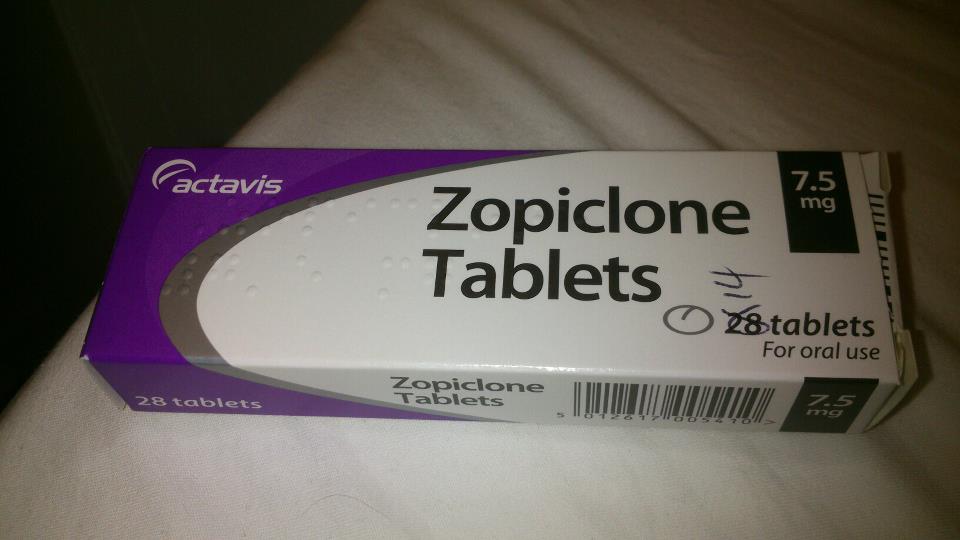
I
suppose the main achievement of my week is my first decent night's
sleep in a long while, thanks to largely to this bad boy:
It's
apparently somewhere between Kalms and popstar killer Propofol. It
certainly put me out. I'm not taking one now until I NEED to. They
are, apparently, scarily addictive. That's what I call a balm of hurt
minds.
What
is bizarre is that I've overcome the majority of my problems, so why
can't I sleep now? Work's going good, social life pretty good, I eat
well, including whole bunches of bananas (known for sugar-balancing,
sleep-assisting properties), and more records smashed at the gym. But
apparently, insomnia just happens regardless. So pills it is.
5
gym improvements this week:
10
minute run: up 3 speeds
Abs
machine, 3 discs, 50 reps: up 1 notch
Pulley
pull-ups (lifting the bar from waist to chin): up 1 notch
Anyway.
I need to stop using the computer before bed. This is, apparently,
part of the problem. 'Scuse me while I take great nature's second
course.
Well,
it was only a matter of time before The Hairy Dieters offered up a
“complicated” recipe. The problem I found with this dish was the
sheer volume of different ingredients- and steps in the process-
required to make the soup. My kitchen just doesn't accommodate that
volume of food! And my brain doesn't accommodate all that
information!
The
process of preparing for this soup took AGES. I cut the tomatoes and
dunked them in boiling water to slip off the skin, but I didn't leave
them in the water long enough. THD says cook it all in a saucepan. A
big fuck-off wok was more appropriate. I don't know whether I got the
water levels wrong, but it came out thick: more like stew than soup.
But I've got to be honest: It tasted better than I thought it was
going to. And at least I've got something to eat for the next few
days.
Having
said that, the process was no more complicated than some of the other
recipes I've cooked. I think when I looked at the ingredients list
and the recipe, I thought, fuck, this looks hard. But it actually
isn't that taxing to do. It just takes time. I'm learning to cook in
order to seek out these revelations. I don't want to be able to just
say, “I learned to make Minestrone.” I want to be able to say, “I
didn't think I'd be able to make Minestrone, but I did anyway. And it
came out good.” And if I can achieve that with Minestrone, I can do
it with anything else, right?
“What
is a good screenplay? I kept asking myself. And pretty soon I started
getting some answers. When you read a good screenplay, you know it—
it's evident from page one, word one. The style, the way the words
are laid out on the page, the way the story is set up, the grasp of
dramatic situation, the introduction of the main character, the basic
premise or problem of the screenplay—it's all set up in the first
few pages of the script: Chinatown, Five Easy Pieces, The Godfather,
The French Connection, Shampoo, and All the President's Men are all
perfect examples.”
It's
also seemingly a minute sector of the online writing community, and
of the creative writing scene in Manchester. Finding people who know
about screenwriting and who ready to share their knowledge is no easy
feat. There's a plethora of fiction feedback groups, both who meet in
person and who meet online, but screenplay writing is nowhere near as
prevalent. Throughout the month, I had to broaden out what I was
looking for.
By
searching for information on screenwriting in general, and asking
around on social media sites, I met a handful of people who work in
the screenwriting / film making industry, and got some valuable
feedback on my synopsis for Once Upon a Time in Manchester, my
political terrorism script. (Let's say it needs a lot of work.) I
found a few websites that looked helpful to those who were at the
first draft stage. I've written a first draft, but I wanted synopsis
feedback first- so I may have to come back to these sites later in
the year to try them out. I found TONS of .pdf resources through a
contact, which has made fascinating reading the last few weeks. But
essentially, I've not been ready to rewrite the script, I've not
actually used the websites and I've not made progress with any other
screenplays, aside digging out the first screenplay I ever wrote.
Diner-
later retitled Restaurant, although I can't find my draft with that
name anywhere- was a script I scribbled out on my lunch breaks in 5th
form. And it shows. The dialogue is weird, all the characters sound
like a zany 15-year-old boy (i.e. a younger me) and the action is a
little jolty as well. It needs a lot of work. But it's got potential.
I've had a quick butchers at it and made a few notes, but when I will
dedicate the time to tweaking it, I don't know.
So-
results? Screenplay info is thin on the ground, but it's out there to
be found with a bit of determined rummaging.
I've
been a member of feedback group Writers Connect for a few years now.
Prior to that, I've visited a number of other, less successful,
creative writing groups that have operated in different ways. The
methods people use in their groups may vary, and the way writers
interact can affect the dynamics of the meeting. It can also affect
the outcome of the finished pieces of writing. I'm no expert, but I
was wondering: what can we do to make sure a group is as productive
as possible? Drawing on experience, here's my ten most-helpful
pointers that could assist you or your writers group.
Pick
a venue with a reasonable noise level. You'll be reading out work to
a good number of people, so not a library. But also, avoid bars with
blaring music, high walls or too much background chatter. Perhaps a
coffee shop?
Your
venue should have tables that can accommodate you all; where you can
sit around as a group and still hear each other.
Start
the meeting with a warm-up writing exercise. Have a look through
this blog for examples. Before you set the timer, suggest everyone
writes double-spaced so each person can fill in ideas as they go
along, or cross out and replace words. After the timer has gone, let
the group members read out their pieces.
Whether
reading out the results of the exercise, or a piece they have
brought in for critique, remind readers to project their voice. Each
reader should speaking loud enough for the person in the group sat
furthest away from them to comfortably hear them.
Relax
when reading. Reading out your work to a group of unknowns can be
uncomfortable the first few times, but remember that everyone at the
group has been there- some may still be. I find it helps to go into
the world of the story- forget you're sat at the table at the venue
in town, surrounded by readers. Be with your characters.
Our
group organiser allows us to email our stories to her if we have
printer problems. That way she can print them and bring them to the
meet-up for us. If you're a kind organiser, suggest this to the
group (but only bring it up when someone says they have had printer
problems).
If
you use a website like Facebook or Meet-ups to organise the group,
it's up to each person to update their activities on the site. If
you plan to attend the meeting, let the group know- then turn up. If
you realise you can't make it, update people. In our group, we find
that a lot of people confirm their attendance online but fail to
show on the day. It's fair enough that problems arise and that you
might not be able to attend, but in an era with mobile internet, it
shouldn't be too hard to correct your plans online.
You
might find the opening moments of the meeting are a good time to
share any writing-related information people might have- any
publications people have achieved, any resources found like feedback
websites or good advice books, or any events that might be running
like fiction or poetry nights in the area. Or, to save time at the
meeting, you might want to encourage members to post these findings
on the website.
Turn
up on time. If you're late, you might have less time to perform the
exercise, and if you miss that totally, you may miss the beginning
of the first story. How effective could your feedback be if you
don't know as much as everyone else?
Get
a good night's sleep before the meeting. Our meet-ups are on Sunday
afternoons. There has been a few times where I'd been out the night
before, woken up in time for the meeting and thought, “well, I'm
awake. I might as well go.” I've then been drifting off in the
middle of the meeting and people have had to turn over the pages of
the printed stories for me. Embarrassing.
Some
of these pointers may seem obvious, but mistakes do happen on
occasion. Get on top of these ten and you'll have an effective,
enjoyable and powerful writing group. Can you suggest other ideas?
Episodes
2 and 3 of BBC3's scientific matchmaking show The Year of Making Love
were just as entertaining as the first. I was part of this show. So
far, the majority of my filming hasn't aired, although I was shown
for the second time last night- for one epic second again.
I'm
really surprised how engaging the show is- I normally shun television
unless it's South Park or Family Guy, but I've really got into YOML.
The show normally trends on Twitter during airing, so get online to
see what the public reaction is. Presumably, I'm one of the subjects
in the next three shows...