Saturday, 27 November 2010

The Future: Carbon Diaries


For this Manchester Literature Festival event I was the proud official event blogger. Check out my coverage over on their blog.

http://manchesterliterature.blogspot.com/2010/11/future-carbon-diaries.html

It was also the last MLF event that I attended. A great round-off to the festival and a fascinating event. Thanks go to the event organisers and Carbon Diaries author Saci Lloyd.

Thursday, 25 November 2010

Who is your most famous Twitter follower?

The nice thing about being a celebrity is that when you bore people, they think it's their fault.
-Henry Kissinger

In the future, everyone will be famous for 15 minutes.
-Andy Worhol


I realise this is insanely, stupidly geeky, but I've been following Verified Twitter accounts for a few b-list actors- just out of morbid fascination, more than anything. It's like the live html equivalent of MTV's Cribs, the show where a camera crew follows around a celebrity as they give a guided tour of their house. Cribs is a ridiculously boring programme, detailing how celebs live their lives when they're not working their arses off (or snorting coke off hookers' cleavages, etc. We are sometimes told. Strangely, this isn't mentioned in the show. Or on Twitter.)

Looking into a celebrity's life must still interest a lot of people, though- if Britney Spears' 6.3 million followers are anything to go by- and seeing big names update Twitter live also has a strange appeal.

Verified Twitter accounts display a little blue emblem with a tick inside. This means the bosses at Twitter have confirmed that the account is, indeed, being used by the celebrity it represents. Anyone can follow any account, unless you block them or they block you. Have a look at “Who to follow” and click “Entertainment” from the range of links on the Twitter homepage. I'm sure you'll recognise a few names. MC Hammer and Family Guy creator Seth McFarlane are among the offerings.

The hard part: getting them to follow back. Apparently, a nice message can sometimes work. I haven't tried this yet.

Have a look at my Twitter. Follow if you like:

http://twitter.com/#!/matthewtuckey

I think the closest I've got to a celebrity follower is social media guru Denise Wakeman, who herself has 18,000 followers and advises businesses and bloggers on making the most out of the internet. She's not exactly a household name.

http://twitter.com/#!/DeniseWakeman


Interestingly, though, Denise following me might be more beneficial than the likes of rapper Ludacris or actress / cradle snatcher Demi Moore returning the favour. It seems that followers of internet experts have followers themselves with “more influence” than followers of celebrities.

http://mashable.com/2010/06/16/twitter-follower-influence/

Online web and tech mag Mashable says “Celebrities are bound to attract mainstream followers less interested in their own Twitter follower counts and more consumed with their celebrity obsessions.”

Cough.

If you're in a similar situation to me- writing and trying to get a bit of exposure- it might be better to follow the social media heavyweights, those who advise people how to use social media to their advantage. But then, on the flip side, P Diddy wants to know whether I think being a dog would be preferable to being a cat.

http://twitter.com/#!/iamdiddy

And how would I know to ponder this vital rhetorical scenario without following him on Twitter? Hold on, Diddy. I'll tweet you back when I've uploaded this...

I'm going to send a few messages out and see who responds- I'll post again in a month to see what's happened. Have a go yourself. Comment if you have any success!

Monday, 22 November 2010

Women and Crime Fiction


“People are weird,” says Sophie Hannah, UK crime novelist. “Myself included.”

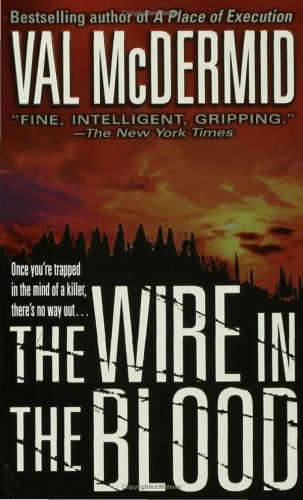
It’s Friday 22nd October- Day 9 of the Manchester Literature Festival. I’m at Manchester’s Whitworth Art Gallery for the event, Women and Crime Fiction. Tonight Sophie is in conversation with Val McDermid, also a crime writer, in the gallery’s main hall. Keeping the discussion fair and square is June Davis from Manchester Waterstones.

I’m the only “young” man in the 100-strong audience- unsurprising, given the event title- in fact 90% of us are women in their forties. The topic- the immense, morbid fascination people have with crime fiction. Why do we enjoy reading about murder? Particularly, why do women love this subject?

Val mentions that the violence in her novels often takes people by surprise. “People say, ‘Your novels are very dark.’ Yes,” she explains, her eyebrows raised for emphasis, “They’re crime novels!” She explains that this is particularly the case with Scottish crime novels. Irvine Welsh is the only Scottish writer that I’m familiar with, and his books Crime and Trainspotting are very dark. So I concur there.

Val doesn’t let morbidity get in the way of humour, however. She knows that, no matter how disturbing a story could be, it must have a few chuckles along the way. In fact she claims that, in real life, some of her best laughs have been at funerals. She also discusses researching the emergency services, saying that ambulance drivers have a habit of making “sick jokes” about their work. I’d cite the film Bringing Out the Dead, by Martin Scorsese, if you wanted to know a little more about that.

Sophie explains she recently went to “a room full of people paid to pretend to be people I made up.” I’ll give you a moment to decipher that…

Yes, a production company is filming one of her novels! First of the Last Chances, her fifth novel, is in the movie pipeline. Or so she says. Google ain’t saying much though.

Val has also had her work committed to celluloid. She mentions that she visited a read-through, where actors sit together at a table and act out the script. It’s normally the first time the actors will collaborate on a day’s work. She tells us that, at these times, actors will read their lines totally flat with no emotion. Thespians love to save their performances for the cameras.

Sophie proved herself not quite the bastion of gender equality when she claimed that “men can be relied upon to find something that they think is really interesting, but isn’t.” Her husband was apparently enthralled by a documentary on rare lizards, which confused her. From a man’s perspective… it depends on the lizard, doesn’t it?

After the discussion the panel answered audience questions.

Sophie has written some graphic details in her career as an author, but tells us the issues that she “couldn’t write about” were terminal illness and state executions. Everyone has their own taboo, I suppose.

Sophie describes a particularly helpful interview with a police officer, which she conducted for research some time ago. She found out that he was a psycho as well! Bonus! He was arrested for a violent crime some time later.

She also tells us of a reading group in an unlikely place- a prison. The violent inmates LOVE her work! She claims she turned down an offer to perform a reading. I would have done a meet and greet if I was I her situation. But that’s just me.

The talk ends with a discussion about the freedom that crime writing brings. In the real world, the panel agree, women get tougher sentences for murder because society expects women to be nicer than men. A woman killing someone is, supposedly, more shocking than a man doing so. To physically kill someone is, clearly, not the nicest of things to do and this will probably land you in prison (perhaps being interviewed by a crime writer, if you’re lucky.) However, writing about such things is largely harmless. In particular, society tells women to be the nice ones- anthropology does too. Men use violence to hunt, gather and protect. Women don’t. Today, though, women can be as violent as they like- and get paid for it. If they happen to be a novelist.

Recommended reading:
Sophie Hannah
http://www.sophiehannah.com/

Val McDermid
http://www.valmcdermid.com/

Waterstones Deansgate
http://www.waterstones.com/waterstonesweb/navigate.do?pPageID=200002

The Whitworth Art Gallery
http://www.whitworth.manchester.ac.uk/

The official Manchester Literature Festival event blog
http://manchesterliterature.blogspot.com/2010/11/val-mcdermid-and-sophie-hannah-at.html

Saturday, 20 November 2010

Published: Afterwards


For the purpose of promotion I will show you who
Is causing a commotion up at Oldham Zoo
You won’t find a creature who’s a massiver colossus
Thank my old friend Peter, who’s a rapping hippopotamus
He’s dozing in his quarters, mostly underwater
With the novel The Informers open in the corner
Halfway down the corridor, walking in approach:
Peter’s only confidant, the awesome Fluffy Oakes.
Fluffy’s made a promise to the big aquatic mammal
To bring fantastic literature, flash fiction or a drabble
He walks into the room and says, “Check out what I’ve got for ya,
An E-magazine called Every Night Erotica
The magazine is free, there’s no need to start a hedge fund,
This story’s by Matt Tuckey, and he's a fucking legend!
It’s a decent publication and I know that you’ll be hot for this,
But in case of provocation I must tell you that it’s not for kids."

http://www.everynighterotica.com/afterwards-matt-tuckey/

Friday, 19 November 2010

Comedy Poetry Slam!

The Manchester Literature Festival event took place at the Northern pub in- unsurprisingly to Mancs- the Northern Quarter. On the evening of 21st October, Julian Daniel hosted the sell-out event, which he described as “like the X-Factor without the threat of deportation.” The slam offered a cash prize to the winning poet. Other participants won a recession-busting stint in a Chilean mine.

Julian got us to practice clapping and laughing- literally- before the poets took to the mic.

Mark Edmondson’s poem “Denise” featured a fat, depressed, female double amputee.
Dave Till’s “Take a bath” ended with a scene of suicide. Ho ho!

Julian read a poem- also hygiene-related- in which he advised us not to “dump someone in a bath with a huge erection.” Noted.

Poets reeled off their work in quick fire- Alex Helan gave us “Call Centre” and “Last Chance Saloon.” Machak Prenchet read out an unnamed piece about bowel movements and CO2 emissions. Jack Regan’s poem “I Like Girls” was funny but not PC. He raised a few disgruntled eyebrows and I thought the black woman next to me was going to kill him.

Marvin Cheeseman took the mic after this, who- if I remember rightly- was not part of the slammers. In his intro, he describes Wayne Rooney as “a piece of shit.” He was promoting his book Full Metal Jacket Potato, a comedy poetry anthology. He read out a series of shorts, including “Primark- the Rumble in the Jumble”, “Love Poem to Sophie Ellis Bextor” and “If”. Impressive stuff.

Among other slammers was Tony Walsh, who I marked as the best of the night. His poem “No Room at the Burnie Inn” described the worst Christmas party ever. His performance melded smutty words with wolf-whistles, yawns and some skillful rhyming couplets.

Ed Kanghi followed Tony. “What I do when I’m not writing poetry,” said Ed, “Erm, I went to an orgy.” He then reads “Parlour Across the Road” and a series of other twisted, graphic shorts. Good work, Ed.

After a second-place tie and a one-on-one slam-off between two poets, Ben took silver with “Poetry’s Worst Enemy”, about alcohol. He won a Manchester Literature Festival T-shirt. My prediction was accurate- Tony Walsh took the metaphorical comedy golden medal: a bottle of bubbly, an MLF T-Shirt and a wad of cash.

So don’t overlook poetry- it is not all Seamus Heaney and painful GCSE English Lit flashbacks. Keep your eyes peeled for more events.

Here’s Rowena Forbes’ official MLF write-up.

http://manchesterliterature.blogspot.com/2010/11/giggle-inducing-concoctions.html

Here’s the venue- a very modern pub:

http://www.thenorthernpub.co.uk/

Thursday, 11 November 2010

Manchester Blog Awards!


Wednesday, 20th October.

I’m in the ironically-titled Manchester Deaf Institute, a bar on Oxford Road, where trip-hop music pulses from the speakers. An array of fine whiskeys and bourbons lines the back bar. I’m sipping Chairman’s Rum as bodies fill up the room, the two factors telling me it’s time to take off the Patrick-Bateman-style long woollen coat. Tonight it’s the Manchester Blog Awards, a Manchester Literature Festival event.

The bar, which before being so, was the actual institute for deaf people, was probably originally built as a church. The pew seating stretches up, row by row, into a moodily-lit alcove with flowery flock wallpaper where amateur writers are choosing padded seats.

Awards representative John Atkin takes the stage/alter. This year, he says, there have been 298 online nominations for the awards. That’s a 50% increase on 2009. 2010 was the first year that the public could vote, as opposed to a panel of judges. As a result 2000 votes were cast in the 2-week voting period, which I think illuminates extent of the burgeoning blogging scene in Manchester. It also shows that bloggers have got friends and readers, and that they aren’t all sat alone in darkened rooms, writing solely for themselves: there’s a defined writing community out there.

Before the announcement of awards, we’re treated to a few readings. First, official event blogger David Hartley reads out “Unknown Sensor Mast”, his bizarre but captivating story on 330 Words.

http://330words.wordpress.com/2010/08/19/unknown-sensor-mast-written-by-david-hartley/

Chris Killen performs a reading of his choose-your-own route story.

Think Ian Livingstone-style, but set in the dating world. Nominee blogger Fat Roland volunteers to take the journey, and strangely picks the opposite decisions to what I’d have chosen at every turning point. On the journey, Roland begrudgingly goes to a restaurant, ditches his date and tries to climb out of the toilet window. The tale ends with dating disaster!

“No matter what you did,” Chris explains, “you go on the date. But there’s only one ending.”

Chris, who originally designed the story as an iPhone app, had tested it on a few people. It’s designed to work for either gender, but he explains it didn’t work on a recent practice-read when a twelve-year-old girl volunteered to be the protagonist.

The climax of the night is the award ceremony itself. Award highlights include Love Levenshulme winning Best City and Neighbourhood blog. One contributor says she’s “written largely about kebabs.”

http://lovelevenshulme.blogspot.com/

Fat Roland picks up the award for best writing on a blog, and in his acceptance speech he apologised to James Blunt- rhetorically telling him “You don’t look like a vagina.”

Here's his electronica-based journal:

http://fatroland.blogspot.com/

Personally I’d like to congratulate all the winners. It was a successful night, a great atmosphere and a superb venue. I’m looking forward to next year’s event.
Here's the bar- good for live music, and decorated with a range of polished skulls, including bison and antelope:
http://www.thedeafinstitute.co.uk/

And here’s the official MLF blog:
http://manchesterliterature.blogspot.com/2010/10/breaking-records-at-2010-manchester.html

Wednesday, 10 November 2010

You Should Have Seen It Coming, Cameron...


Urbis, the modern Manchester museum, recently tweeted this:

“So, with all these media studies students about, why has the 'let's pay no fees' movement got no decent media spokespeople?”
http://twitter.com/#!/urbsmanchester

Interesting. This tweet was undoubtedly relating to today's London “march”.

http://www.bbc.co.uk/news/education-11729912

There always was, and always will be, opposition to fees. And rightly so. There will probably be protests in Manchester and other cities in the near future.

Urbis have asked a good question- one I can answer. The media industry is broader than any other industry you can find. An employee could work in Marketing in media. They could be a technician. They might be a runner in TV or radio, a presenter or a programmer. They could work at an advertising agency or make corporate videos that only bank employees get to see. The point is, “Media” is a broad subject. It’s too broad a topic, in fact, for a Higher Education course to properly prepare a student for the world of work. I have a 2:1 in Professional Broadcast Techniques, a course in which I learned next to nothing about the techniques of broadcasting professionally. It was a very general course, and with little focus on a particular area of media. We definitely weren’t trained to act as a spokesperson for anyone. And I suppose PR should have been part of the syllabus.

Media courses do not prepare people for the world of work. There’s the proof. A plan for the future of Media courses: HE institutions should scrap Media as a general subject and replace it with intensive specialist subjects- like radio programming, marketing, journalism, TV production and advertising. Most of these will cross over, but these subjects will train an individual and channel them into a specific sector of the media industry. “Media”, as a subject, will not. Getting a job in the media, with a media qualification, will rely on many factors- but mostly luck.

Working in many of these industries takes a bit of guts. On my uni course, tutors warned us that we would have to fight our corner in the industry and that media bosses are sometimes short-tempered and tough. They tried to make us outspoken and resilient, but the course itself didn’t bring that out of us. Nobody developed that mentality that a lot of the staff had.

I nearly developed the ability to verbally fight my corner without sounding arrogant. I remember pitching to a tutor an idea for a short surreal film about choking. I wanted to make the audience feel like a lump of food in somebody’s throat as they choke, and I wanted the camera to “fly” out of the actor’s mouth when another character gives the Heimlich manoeuvre. “That sounds disgusting,” my tutor said. “Well,” I replied, “I’ve got the response that I wanted from my audience already. I’ve only pitched you the idea.”

I knew that I’d retorted the way she wanted: I defended my original vision in the face of criticism. She was a good tutor, I suppose. She challenged everyone’s ideas to see how they handled it. This didn’t happen often enough, though.

And that’s why there’s no God-damn student spokespeople out there- uni students aren’t required to “toughen up” and fight with their brains, like they would be in the industry.

Prove me wrong, media students. You deserve a better deal- not just with reducing the price of fees, like every other student, but in being provided with courses that give you tailored tuition AND what you might call “life coaching”- both of which would get you the job you want. The only problem with that is that future students are going to have to compete for the places. But isn’t that what used to happen... only with a grant?